Showing English Bulldogs in AKC conformation events is a hobby shared by a dedicated community of breed enthusiasts who celebrate the breed's unique beauty and character. For many participants, the real reward isn't the ribbon — it's the bond with your dog, the camaraderie with other Bulldog people, and the satisfaction of presenting a well-conditioned, typey specimen that reflects the breed at its best.
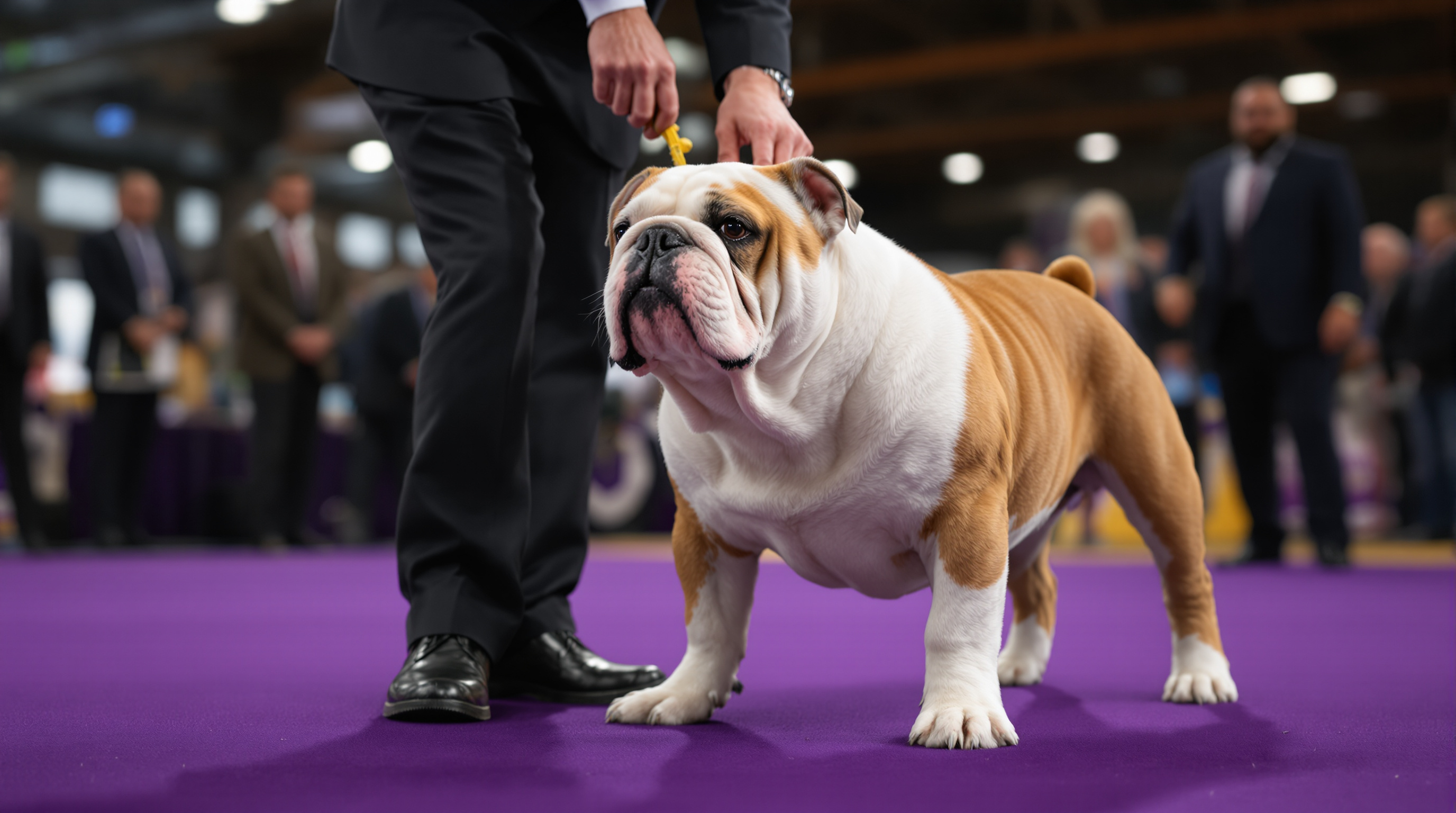
How AKC Conformation Shows Work
AKC conformation shows evaluate dogs against their breed standard. Dogs compete first within their breed, then within their group (Bulldogs compete in the Non-Sporting Group), and finally — if they win their group — in Best in Show.
Within a breed, competition is organized by sex and by class. Dogs and bitches compete separately until Winners Dog and Winners Bitch are selected. Champions then compete for Best of Breed. The classes available include Puppy, 12–18 Month, Novice, Bred-by-Exhibitor, American-Bred, and Open.
Dogs earn points toward their AKC Championship by winning Winners Dog or Winners Bitch placements. The number of points awarded depends on the number of competing dogs of the same sex. Fifteen points are required for a championship, with at least two "majors" (wins of three or more points) required under at least two different judges. For full show rules and schedules, visit the AKC conformation page.
Is Your Bulldog Show Quality?
Not every Bulldog is a show-quality specimen — and that's perfectly fine. Most pet Bulldogs are wonderful companions who don't need to be show champions. If you're interested in showing, have your dog honestly evaluated against the breed standard by an experienced breeder or judge before investing significant time and money in the show ring.
Common reasons a Bulldog might not be show-competitive include: atypical ear set, incorrect bite, light bone, soft back, high tail set, incorrect head size or proportions, or disqualifying color. A dog can be completely healthy and wonderful as a pet while being not well-suited to competition.
If you purchased a puppy from a reputable breeder with the intention of showing, your breeder is your best resource for evaluating your dog's potential. Many breeders will tell you honestly at 8 weeks which puppies they feel are the most promising.
Getting Started in the Show Ring
AKC Sanctioned Matches
Before entering an all-breed point show, it's highly advisable to attend AKC-sanctioned matches — low-key events that mimic show conditions without awarding championship points. Matches are ideal for exposing your puppy to the show environment, practicing the routine, and learning what to expect without the pressure of formal competition.
Handling Classes
Taking a handling class — offered by many kennel clubs and dog training facilities — is strongly recommended for new exhibitors. You'll learn how to "stack" (stand) your dog for a judge's examination, how to move correctly at trot, and how to present the dog to its best advantage.
Joining Your Local Bulldog Club
Connecting with your regional Bulldog club is one of the most valuable steps a prospective exhibitor can take. Experienced Bulldog people are generally welcoming to newcomers and can offer mentorship, ring advice, and informed feedback on your dog. See our Clubs page for a directory of regional Bulldog clubs affiliated with the Bulldog Club of America.
Conditioning and Grooming for the Show Ring
Bulldogs in the show ring should be in excellent physical condition — well-muscled without being fat, with a gleaming coat and clean, tidy presentation. Showing an obese Bulldog reflects poorly on the exhibitor and may concern judges about the dog's overall health.
Weight and Muscle Tone
A show Bulldog should be fit. Short, brisk daily walks and controlled play help maintain muscle without overexerting the dog. Regular weighing (monthly) helps catch weight creep before it becomes a problem. Work with your veterinarian to establish a healthy target weight.
Build the conditioning slowly and well before the entry closes. A Bulldog that has been walked twice a day for two months moves differently in the ring from one that was marched around the block for a fortnight, and judges see the difference in the topline and the drive from behind. Keep the work in the cool parts of the day, watch the breathing rather than the clock, and stop early on anything warm or humid — a dog that overheats at home is out for days, and one that overheats at a show is an emergency. Condition on grass or dirt rather than hot pavement wherever you can, and treat any reluctance to carry on as information rather than stubbornness. Exhibitors who campaign Bulldogs successfully tend to be the ones who did the boring work steadily for months and then did almost nothing in the last week.
Coat Preparation
The Bulldog's short coat requires minimal grooming, but show preparation makes a difference:
- Bathe 2–3 days before the show (coat has a nicer sheen after a few days)
- Use a rubber curry comb or grooming mitt to remove loose hair and stimulate skin oils
- A light spray of coat conditioner or show sheen can add gloss on show day
- Clean all wrinkles thoroughly — a dirty face is immediately noticeable in the ring
- Trim whiskers and facial hair for a neater appearance (optional but common)
- Trim nails well in advance (a few weeks before) so they're not overly long
Wrinkle and Skin Care
Clean, dry skin folds are essential for both health and ring presentation. The night before the show, clean all folds thoroughly with baby wipes or a soft cloth, and dry completely. Apply a very light dusting of cornstarch or talcum powder to keep the folds dry and odor-free.
In the Ring: What to Expect
On show day, arrive well in advance of your ring time. Set up in the designated breed area, allow your dog time to exercise and relieve themselves, and give them a chance to settle before entering the ring.
When your class is called, enter the ring calmly. The judge will ask all exhibitors to move their dogs around the ring together, then will examine each dog individually. The individual examination involves the judge approaching your dog, assessing overall balance and type from several angles, examining the bite and dentition, going over the body (checking muscle, coat, bone structure), and observing the dog on the move.
Stack your dog squarely, with feet placed as described in the standard. Keep the dog's attention with bait (a small piece of food held to attract the dog's gaze and expression) or a squeaky toy. Present the dog confidently and calmly — an anxious handler translates to an anxious dog.
Bulldogs are not natural trotters in the traditional show-dog sense. When moving, keep the pace brisk enough to show the characteristic rolling gait without overextending the dog. A judge who knows the breed will be evaluating for correctness of Bulldog movement — not the flowing trot of a sporting breed.
Special Considerations for Bulldogs in the Show Ring
Bulldogs can overheat quickly in warm show venues. Always bring a spray bottle of cool water, a portable fan, and ice packs for their paws and belly. Monitor your dog's breathing throughout the day. If the dog appears distressed, prioritize the dog's welfare over the competition.
Outdoor shows in warm months are particularly challenging for brachycephalic breeds. Some exhibitors choose not to enter their dogs in outdoor summer shows or carry cooling vests for their dogs.
Finally, maintaining a good attitude — win or lose — is the hallmark of a good sport. Bulldog show people are a tight-knit community; the friendships built at shows often last a lifetime.